
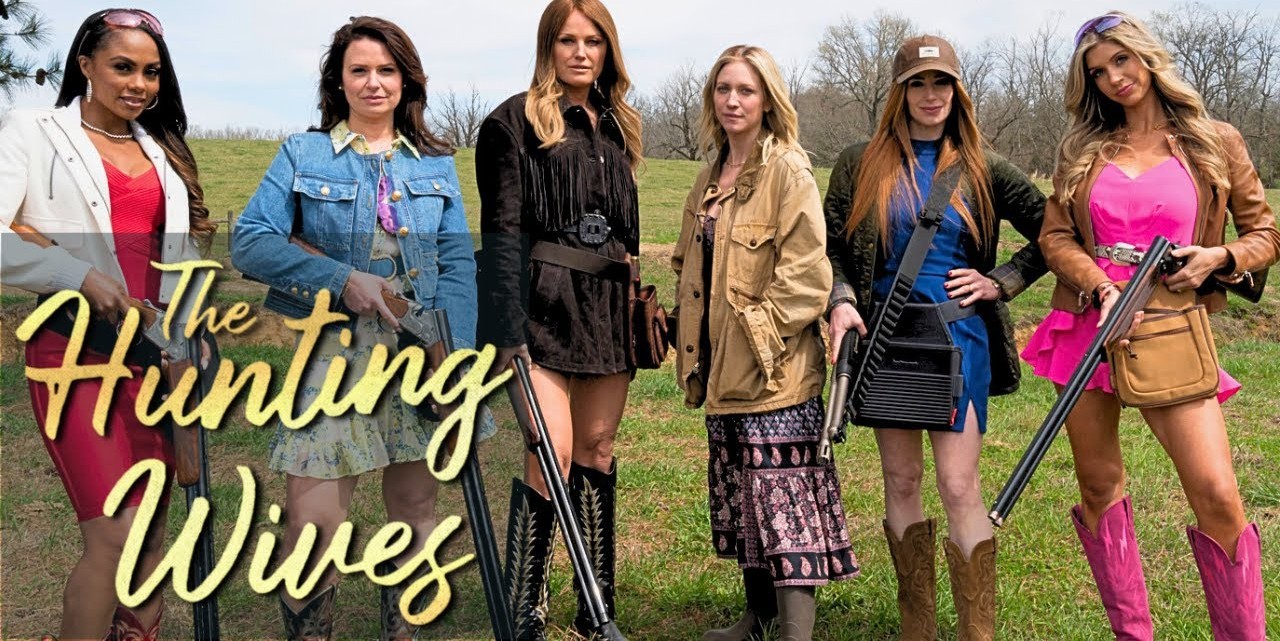
On the surface, The Hunting Wives is a twist-filled murder mystery about wealthy women, small-town secrets, and scandal. But beneath the guns, glamour, and lies is something that has unexpectedly resonated with queer audiences: a story fuelled by sapphic desire, sexual tension, and complicated female relationships.
Originally based on May Cobb’s bestselling novel, The Hunting Wives is returning to the spotlight thanks to its new television adaptation. While the story remains a delicious blend of psychological thriller and Southern noir, it’s the chemistry between Sophie O’Neill and Margot Banks that has become the show’s biggest talking point.
The Sapphic Storyline Everyone Is Talking About
At the heart of The Hunting Wives is Sophie’s growing obsession with the magnetic Margot Banks.
What begins as fascination slowly transforms into flirtation, attraction, and an emotionally messy relationship that refuses to fit into simple labels. Rather than presenting sexuality as black and white, the series explores desire as something fluid and complicated.
Sophie is married to a man while discovering an undeniable attraction to Margot, who is also involved with men, making the show’s queer relationships better described as sapphic or bisexual rather than exclusively lesbian.
That nuance has sparked plenty of conversation, particularly among LGBTQ+ viewers, who have praised the show for embracing sexual complexity instead of forcing characters into neat categories.
Why It Resonates With Queer Women
Part of the appeal is simple: chemistry.
Sophie and Margot’s relationship is built on lingering glances, dangerous attraction, emotional vulnerability, and mutual obsession. Their connection feels charged long before anything physical happens, creating the kind of slow-burning tension that many sapphic viewers say is often missing from mainstream television.
The series also taps into a familiar queer fantasy: the seemingly perfect woman who turns your world upside down. Margot is charismatic, confident, and impossible to ignore, while Sophie embodies the uncertainty and “what is happening to me?” energy that many bisexual and lesbian viewers have recognised in discussions about the show.
It’s More Than Representation
What makes The Hunting Wives stand out isn’t that it’s a “queer show.” It’s that queerness is woven into a story about power, privilege, manipulation, and murder.
The attraction between Sophie and Margot raises the emotional stakes rather than existing as a token subplot. Their relationship is messy, intoxicating, and morally complicated – the same qualities that make the thriller itself so addictive.
That complexity has helped the series find fans across LGBTQ+ communities, even as some viewers have debated aspects of its representation and whether certain tropes work for them.
The Women at the Centre of The Hunting Wives
Brittany Snow stars as Sophie O’Neil, a woman searching for a fresh start after moving with her family to an affluent Texas community.
At first, Sophie appears to be the outsider looking in, but her fascination with the town’s elite social circle quickly pulls her into a world of secrets, power, and temptation. Snow brings a sense of vulnerability and curiosity to Sophie, capturing the character’s struggle between the life she has built and the desires she has kept hidden.
Opposite her, Malin Åkerman plays Margo Banks, the magnetic and unpredictable leader of the Hunting Wives.
Margo is confident, glamorous, and impossible to ignore—a character who thrives on control while hiding her own vulnerabilities. Åkerman’s performance gives Margo a captivating mix of charm and danger, making it easy to understand why Sophie becomes so drawn to her.
Together, Snow and Åkerman create the series’ most talked-about dynamic. Their chemistry fuels the show’s sapphic storyline, with Sophie and Margo’s relationship exploring attraction, curiosity, and the thrill of stepping outside the boundaries of expectation. Their connection is not presented as a simple romance; it is complicated, seductive, and tied closely to the series’ wider themes of identity, power, and secrecy.
The supporting female cast also adds depth to the world of The Hunting Wives. Jaime Ray Newman as Callie Baskin and Katie Lowes as Jill Thompson help bring the exclusive social world of the Hunting Wives to life, while Chrissy Metz as Starr Jackson provides a contrasting perspective on the community and the divisions beneath its polished surface.
The New TV Series Is Bringing New Fans
The television adaptation introduces May Cobb’s story to an entirely new audience.
Since its release, social media has been flooded with clips of the pair’s chemistry, fan edits, and conversations about the show’s unapologetically steamy sapphic scenes. The adaptation has become one of the most talked-about thriller series among queer viewers, with much of the online discussion centring on Sophie and Margot’s relationship.
Season 2 Released Soon
At the moment, Season 2 of The Hunting Wives does not have an exact premiere date, but it has been officially renewed and is expected to arrive later in 2026. Filming has already wrapped, and Netflix has confirmed that the new season is in production.
Where can you watch The Hunting Wives?
- Season 1: Streaming now on Netflix in most regions, including the UK, US, Canada, and many international markets.
- Season 2: Will also stream exclusively on Netflix when it premieres later in 2026.
If you’re new to the series, now is the perfect time to binge Season 1 before the next chapter arrives. The first season ends on a major cliffhanger, setting up an even darker and steamier second season, with Brittany Snow and Malin Åkerman returning alongside several new cast members.
Watch The Trailer
Should You Watch The Hunting Wives?
If you’re expecting a traditional romance, this isn’t it.
But if you enjoy psychological thrillers packed with morally grey women, simmering sexual tension, messy relationships, and shocking twists, The Hunting Wives delivers exactly that.
It’s a murder mystery wrapped in desire, obsession, and secrets, one that’s sparked plenty of conversation within queer communities while proving that audiences are hungry for thrillers where sapphic attraction is central to the drama, not just an afterthought.




Leave a Reply