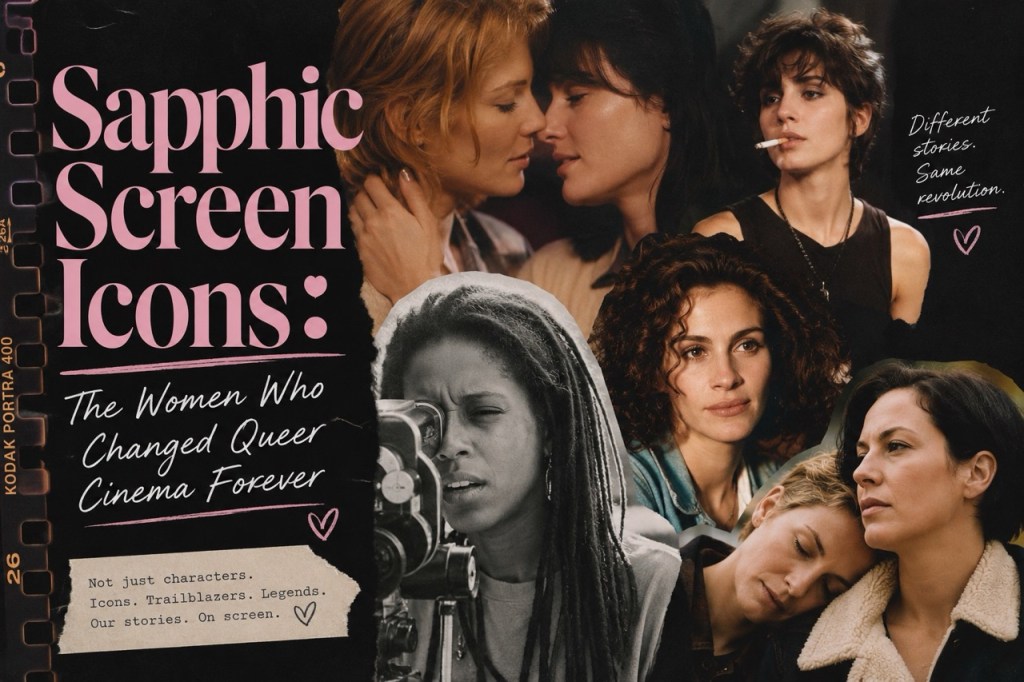
Every generation has its icons. Women who appear on our screens and leave behind something bigger than a performance. They become symbols of confidence, rebellion, romance, and possibility.
For sapphic audiences, screen icons have played an especially important role. Whether they are openly lesbian actresses, unforgettable queer characters, or performers who helped bring lesbian stories into the mainstream, these women have shaped the way we see ourselves reflected in film and television.
From glamorous villains and tragic heroines to fearless lovers and complicated antiheroes, these are some of the women who have become true sapphic screen icons.
Carol Aird — Cate Blanchett in Carol
Carol introduced audiences to one of cinema’s most elegant and unforgettable sapphic characters.
Played by Cate Blanchett, Carol Aird is sophisticated, confident, and quietly rebellious. Set in the 1950s, her romance with Therese, played by Rooney Mara, explores what it means to choose love in a world that expects women to follow a certain path.
Carol became an icon because she represented something rare: a lesbian woman who was mature, powerful, feminine, and complex.
She wasn’t a side character. She was the story.
Villanelle — Jodie Comer in Killing Eve
Killing Eve gave us one of the most fascinating queer characters in modern television.
Played by Jodie Comer, Villanelle is glamorous, unpredictable, dangerous, and impossible to ignore. Her obsession with Eve, played by Sandra Oh, creates one of television’s most intense relationships.
What makes Villanelle iconic is that she refuses to be easily defined. She is not the “good” queer character or the tragic queer character — she is messy, complicated, and completely herself.
Her fashion, confidence, and unapologetic attitude made her a fan favourite around the world.
Max — Daniela Sea in The L Word
The L Word changed the landscape of lesbian representation when it premiered.
The series introduced audiences to a group of queer women navigating love, friendship, careers, and identity. Among its memorable characters was Max, played by Daniela Sea.
While the show has been debated over the years, its importance cannot be ignored. It put lesbian lives, relationships, and friendships at the centre of mainstream television.
For many viewers, The L Word was the first time they saw queer women living openly on screen.
Bette Porter — Jennifer Beals in The L Word
Another L Word favourite is Bette Porter, who became one of the most recognisable lesbian characters in television history.
Played by Jennifer Beals, Bette is intelligent, ambitious, passionate, and often complicated. As an art gallery director, she challenged stereotypes about lesbian women and showed queer characters as successful professionals with full lives.
Her relationship with Tina became one of the most talked-about couples in sapphic television.
Bette’s confidence and intensity made her unforgettable.
Cheryl Blossom — Madelaine Petsch in Riverdale
Riverdale brought sapphic representation to a younger mainstream audience through Cheryl Blossom.
Played by Madelaine Petsch, Cheryl begins as a powerful, dramatic, and mysterious character before exploring her sexuality and relationship with Toni Topaz.
Her storyline became meaningful because Cheryl was not reduced to being queer. She remained ambitious, emotional, stylish, and fearless.
With her iconic red outfits and unforgettable one-liners, Cheryl became a modern queer pop culture favourite.
Anne Lister — Suranne Jones in Gentleman Jack
Gentleman Jack brought a real historical lesbian figure to life.
Played by Suranne Jones, Anne Lister is intelligent, wealthy, independent, and completely unwilling to shrink herself for society.
Based on her real diaries, the series showed Anne’s relationship with Ann Walker and celebrated a woman who loved women openly in a time when that was incredibly difficult.
Anne became an icon because she proved sapphic stories have always existed.
Cheryl Dunye — The Watermelon Woman
The Watermelon Woman is a landmark in queer cinema.
Written, directed, and starring Cheryl Dunye, the film follows a young Black lesbian filmmaker researching the life of a forgotten actress.
The film became iconic because it centred a queer woman of colour and explored identity, history, and representation itself.
Dunye’s work opened doors for more diverse sapphic storytelling.
Lena Headey — Luce in Imagine Me & You
Imagine Me & You gave audiences one of the most lovable sapphic romances in modern cinema.
Played by Lena Headey, Luce is warm, confident, and charming — the kind of character who feels like a breath of fresh air.
Unlike many lesbian romances that focus on pain, Imagine Me & You celebrates attraction, happiness, and choosing the life that feels right.
Luce became a comfort character for many sapphic viewers.
Why We Believe Sapphic Icons Matter
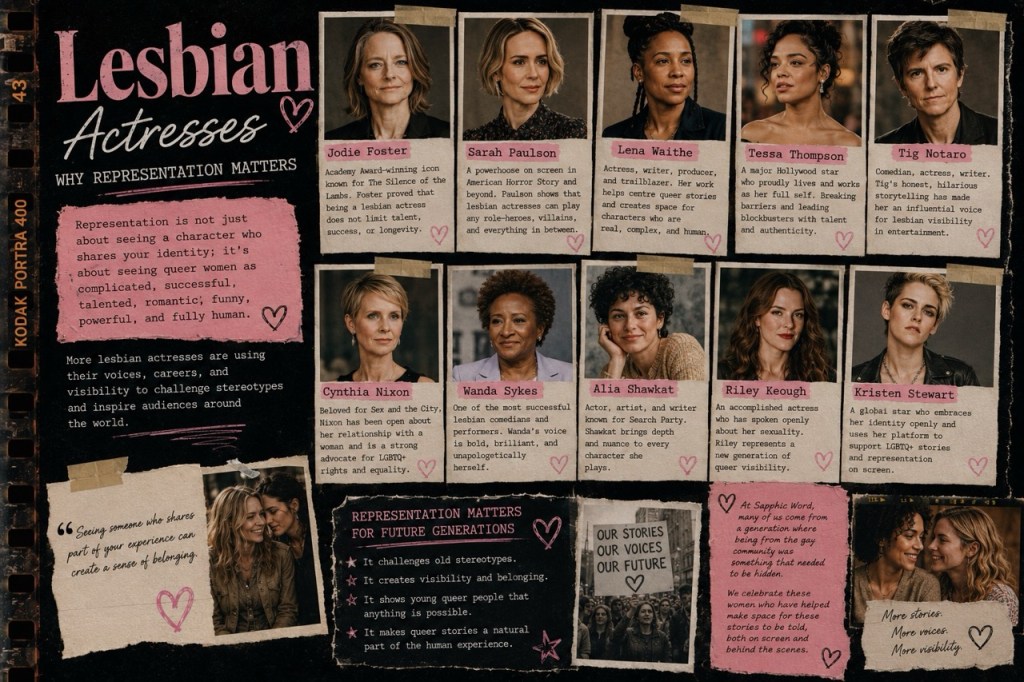
Screen icons do more than entertain us. They influence how people see themselves and what they believe is possible.
For many LGBTQ+ viewers, seeing a woman like them on screen can be the first moment they feel recognised. It can transform feelings of isolation into connection.
Sapphic icons remind us that queer women can be:
The hero.
The love interest.
The villain.
The comedian.
The complicated one.
The person who gets the happy ending.
Representation continues to grow, but these characters and actresses helped create the path.
At Sapphic Word, we celebrate the women who made sapphic stories impossible to ignore, and the ones continuing to redefine what queer visibility looks like.

 Sapphic World
Leave a comment